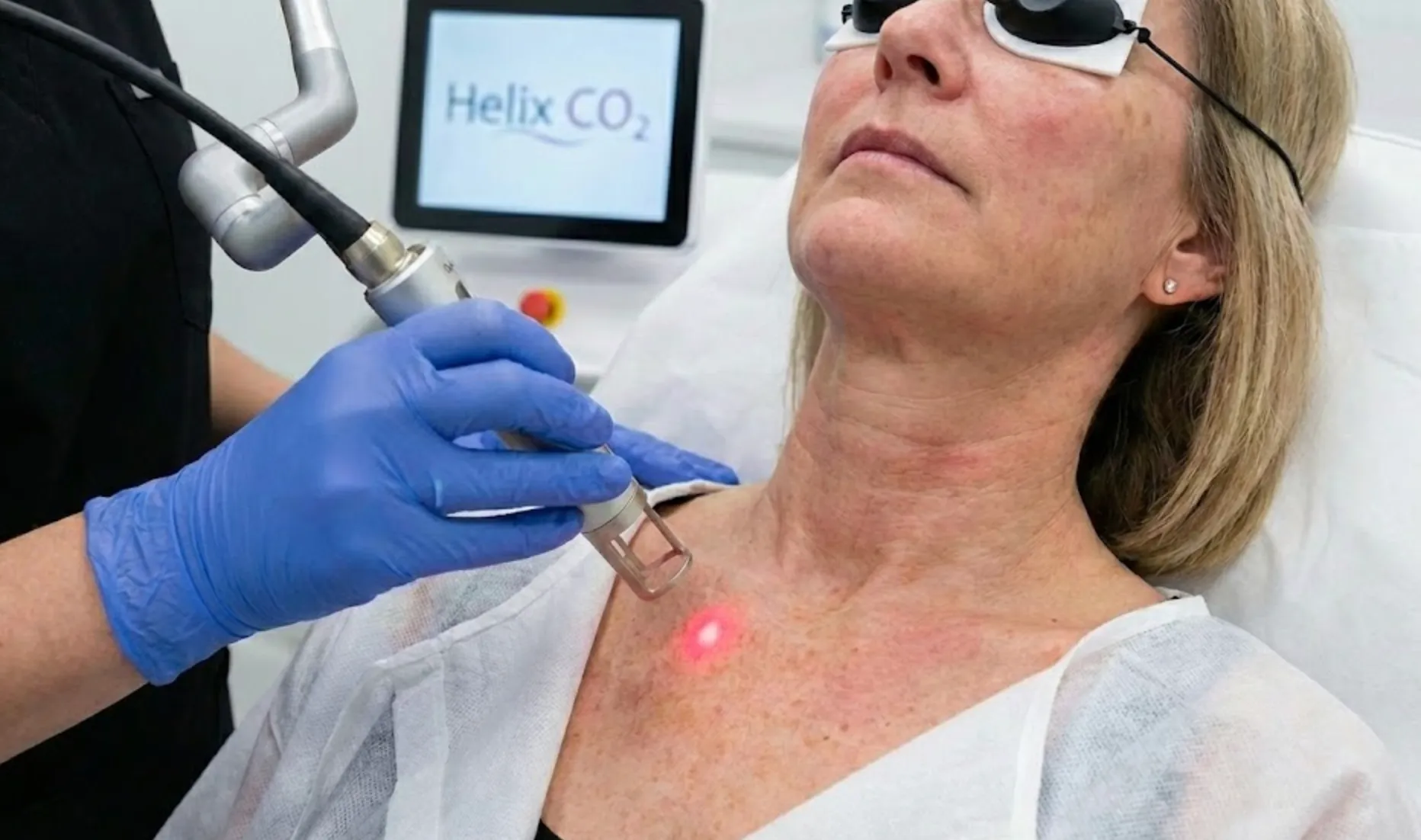
The face often gets the spotlight in advanced aesthetic treatments. Yet the neck and chest are among the first places to show aging, sun damage, and texture changes and they reveal years of environmental exposure daily.
If you’ve noticed neck creases, horizontal lines, uneven texture, or sun spots on your décolletage, modern laser technologies like Helix CO₂ are transforming what’s possible beyond the face.
Why the Neck and Chest Age Differently Than the Face
The Early Signs Many People Miss
No matter your age, the neck and chest are often overlooked until changes become prominent. Common concerns include:
- Horizontal neck creases or “tech neck” lines
- Loss of firmness and skin elasticity
- Sun spots, pigmentation, and uneven tone
- Rough texture and fine lines
- Thinning skin that appears more transparent or fragile
Unlike the face, the neck and chest have thinner skin, fewer oil glands, and are more directly exposed to ultraviolet (UV) light, especially if sunscreen isn’t applied daily. Over time, this leads to collagen breakdown, texture irregularity, and pigmentation changes.
What Makes Helix CO₂ Ideal for Neck and Chest Rejuvenation
Helix CO₂ laser resurfacing stands apart from other approaches because it combines the controlled strength of ablative CO₂ energy with precision delivery that targets specific layers of skin without unnecessary trauma.
Key Features That Matter for These Areas
- Controlled, Fractionated Energy
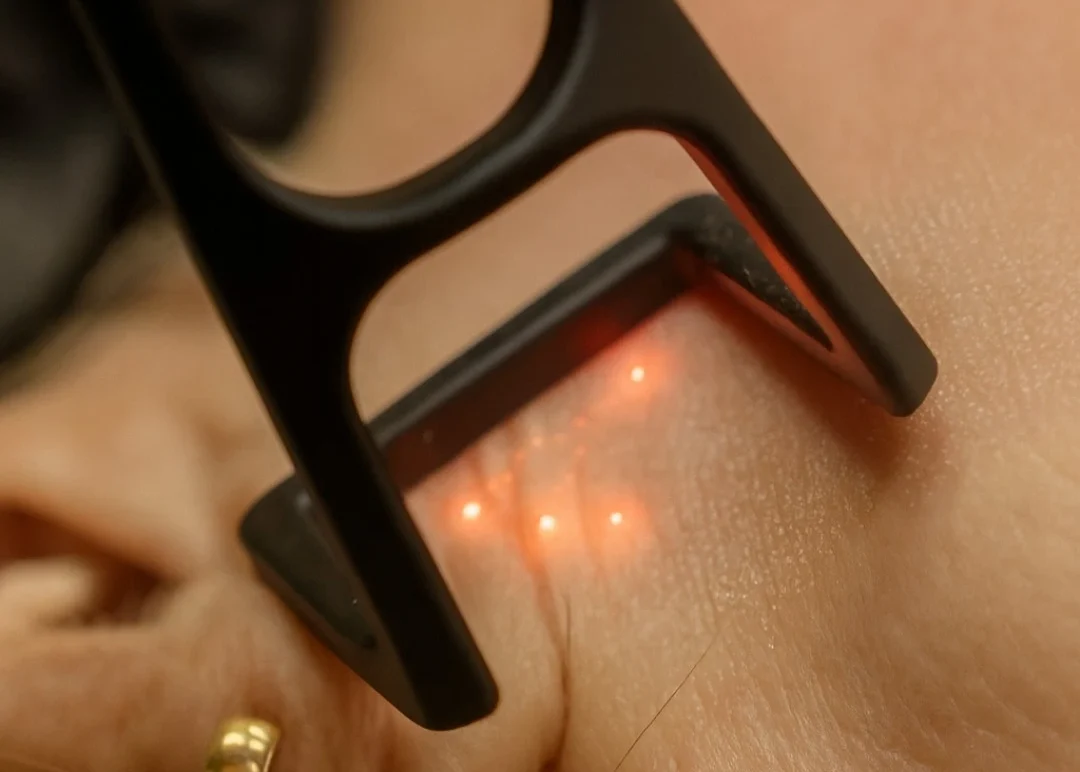
Helix CO₂ delivers micro-columns of laser energy while preserving surrounding tissue. This allows for:
- Reduced downtime
- Predictable healing
- Focused treatment of texture and pigmentation
- Safe for Thin or Delicate Skin
The neck and chest are more sensitive than facial skin. Helix’s calibrated settings make it possible to treat these areas effectively while minimizing risk.
- Stimulates Deep Collagen Remodeling
Collagen is the structural framework that gives skin strength and elasticity. With age and sun exposure, collagen production slows. Helix CO₂ encourages new collagen formation, improving firmness over weeks and months.
- Customizable Depths
Not all concerns require the same intensity. Helix CO₂ can be adjusted for:
- Superficial resurfacing for sun spots and fine lines
- Deeper resurfacing for creases and textural irregularity
Learn more about how this laser works in depth at our Helix CO₂ laser page.
How Helix CO₂ Addresses the Most Common Neck and Chest Concerns
Neck Creases and Horizontal Lines
These lines often appear due to repetitive movement, loss of elasticity, and collagen breakdown. Botox or fillers can help movement-related lines on the face, but deep neck creases often require structural remodeling of the skin itself.
Helix CO₂:
- Smooths surface texture
- Encourages deeper collagen regeneration
- Reduces the appearance of static lines
Sun Spots and Pigmentation
UV exposure causes irregular melanin distribution. Over time, clusters of pigmented cells become visible as sun spots or patches on the chest.
Helix CO₂:
- Breaks up pigmented layers
- Promotes uniform skin tone
- Can reduce or eliminate sun spot visibility
Rough Chest Texture and Fine Lines
Many topical creams improve hydration but don’t change the deeper structure of the skin. Helix CO₂ goes beneath the surface, addressing the root causes of texture changes.
With a series of treatments, many clients notice:
- Smoother and softer skin
- Improved clarity and luminosity
- Reduced rough or sandpaper-like texture
How Treatment Works: What to Expect
Consultation and Customization
A qualified specialist will assess:
- Skin type and condition
- Extent of sun damage
- Texture irregularities
- Goals and expectations
This ensures a personalized plan that balances efficacy with comfort and safety.
The Day of Treatment
- A topical numbing agent or local anesthetic may be used
- The laser is applied in a controlled pattern
- Total time is typically 30–60 minutes depending on treatment area
During the session, you may feel warmth or a mild prickling sensation and most clients tolerate this well with numbing.
Recovery Timeline
Recovery varies based on the intensity of treatment. For moderate resurfacing:
- Day 1–3: Redness and mild swelling
- Day 3–7: Peeling and shedding of damaged layers
- Day 7–14: New skin emerges with improved tone
- Weeks 4–12: Collagen continues to remodel
If you’re considering deeper settings for more significant texture change, similar to what we discuss in our deep scar treatment guide.
For a complete breakdown of expected recovery care and tips, see our full CO2 Laser Recovery guide.
Helix CO₂ vs Other Laser Modes
Not all CO₂ treatments are created equal. Helix technology brings advanced control that makes it suitable for neck and chest areas where precision matters.
Here’s how it compares:
|
Feature |
Traditional Ablative Lasers |
Helix CO₂ |
|
Precision |
Moderate |
High |
|
Downtime |
Longer |
Shorter to moderate |
|
Collagen stimulation |
Yes |
Strong |
|
Pain / discomfort |
Higher |
Controlled |
|
Customizable depths |
Limited |
Excellent |
If you’re comparing Helix against other CO₂ modes like CoolPeel, SULTRA, or Fusion, we’ve broken those differences down in detail.
Realistic Expectations: What Helix CO₂ Can and Cannot Do
What It Can Do
Helix CO₂ is well suited to:
- Reduce visible neck lines
- Smooth rough texture
- Minimize sun spots and pigmentation
- Improve overall tone and clarity
- Stimulate collagen deep beneath the surface
What It Cannot Do
It will not:
- Eliminate structural causes of aging like bone loss or major muscle laxity
- Provide instant perfection
- Replace surgical lifts for very advanced sagging
This is why a proper consultation is so important to establish what’s possible and match treatment to goals.
Is Helix CO₂ Safe for All Skin Types?
Helix CO₂ is a powerful resurfacing tool, and with power comes the need for precision planning.
Ideal candidates typically:
- Have lighter to medium skin tones (Fitzpatrick I–III)
- Are committed to diligent sun protection
- Understand staged improvements over time
People with darker skin tones may still benefit, but they require specialized protocols to reduce pigmentation risks. Your provider will guide this decision.
Combining Helix CO₂ With Other Treatments
For comprehensive neck and chest rejuvenation, Helix CO₂ can be safely combined with other modalities when appropriate, such as:
- Microneedling for collagen induction
- Medical-grade topical therapies
- Regenerative modalities
- Injectables for structural volume loss
Always discuss combination plans with your provider so that timing and sequencing optimize results.
For a deeper look at how Helix CO₂ transforms skin from the inside out.
Preparing for Treatment: A Practical Checklist
Before Your Session
- Stop retinoids and exfoliants 3–5 days prior
- Avoid sun exposure and tanning
- Notify your provider of any skin conditions or medications
- Plan for recovery downtime
On the Day
- Wear comfortable clothing
- Arrange transportation if advised
- Ask questions before treatment begins
Aftercare Essentials
- Gentle cleansing
- Broad-spectrum sunscreen daily
- Barrier ointments or prescribed wound care
- Avoid picking or scratching as skin heals
A thoughtful aftercare plan accelerates healing and maximizes outcomes.
What Results Look Like: Timeline and Progress
You’ll notice:
- Immediate glow as dullness lifts
- Texture refinement within days
- Pigment lightening over weeks
- Collagen tightening continuing for months
Most clients see sustained improvement with a series of treatments tailored to their needs. Your provider will design a plan that fits your lifestyle and goals.
Patient Stories and Common Transformations
Clients often share that:
- Their chest looks brighter and more even
- Neck creases appear softer and less noticeable
- They finally feel confident wearing tops they avoided before
- Texture feels smoother and younger
These are typical outcomes seen when expectations, planning, and aftercare align.
FAQ: Helix CO₂ for Neck and Chest Rejuvenation
Does Helix CO₂ hurt?
Most clients experience a warming or prickling sensation during treatment. Numbing and comfort measures are used to keep you comfortable.
How many sessions are needed?
It varies. Many people start with 2 to 3 sessions spaced weeks apart. Your provider will tailor the plan.
How long is recovery?
Mild to moderate resurfacing may require about one week of visible healing, with ongoing improvement for months.
Will I need downtime?
Expect some redness and peeling. Light social activities can resume as healing allows, but strenuous exercise should wait until skin is less reactive.
Can I wear makeup after treatment
Not immediately. Makeup is typically introduced only after the initial healing phase and with provider approval.
Is it safe for all skin tones?
People with darker skin tones can be treated safely with a tailored approach, but not everyone is ideal. Consultation is essential.
How does Helix CO₂ compare to nonsurgical options?
Helix CO₂ targets deeper layers of damaged skin and stimulates collagen in ways topical or non-ablative modalities cannot. For many, this means more dramatic texture and pigmentation improvement.
Final Thoughts: The Chest and Neck Deserve Precision Too
Your neck and décolletage tell a story shaped by time, expression, sun exposure, and lifestyle. With advanced resurfacing like Helix CO₂, you can address these areas in a way that is thoughtful, effective, and grounded in real clinical science.
If you’re curious about what Helix CO₂ can do for your neck creases, sun spots, or overall chest texture, the best next step is a comprehensive evaluation with an experienced specialist.
Start the conversation at iBeauty Medical and discover a tailored plan that aligns with your goals.