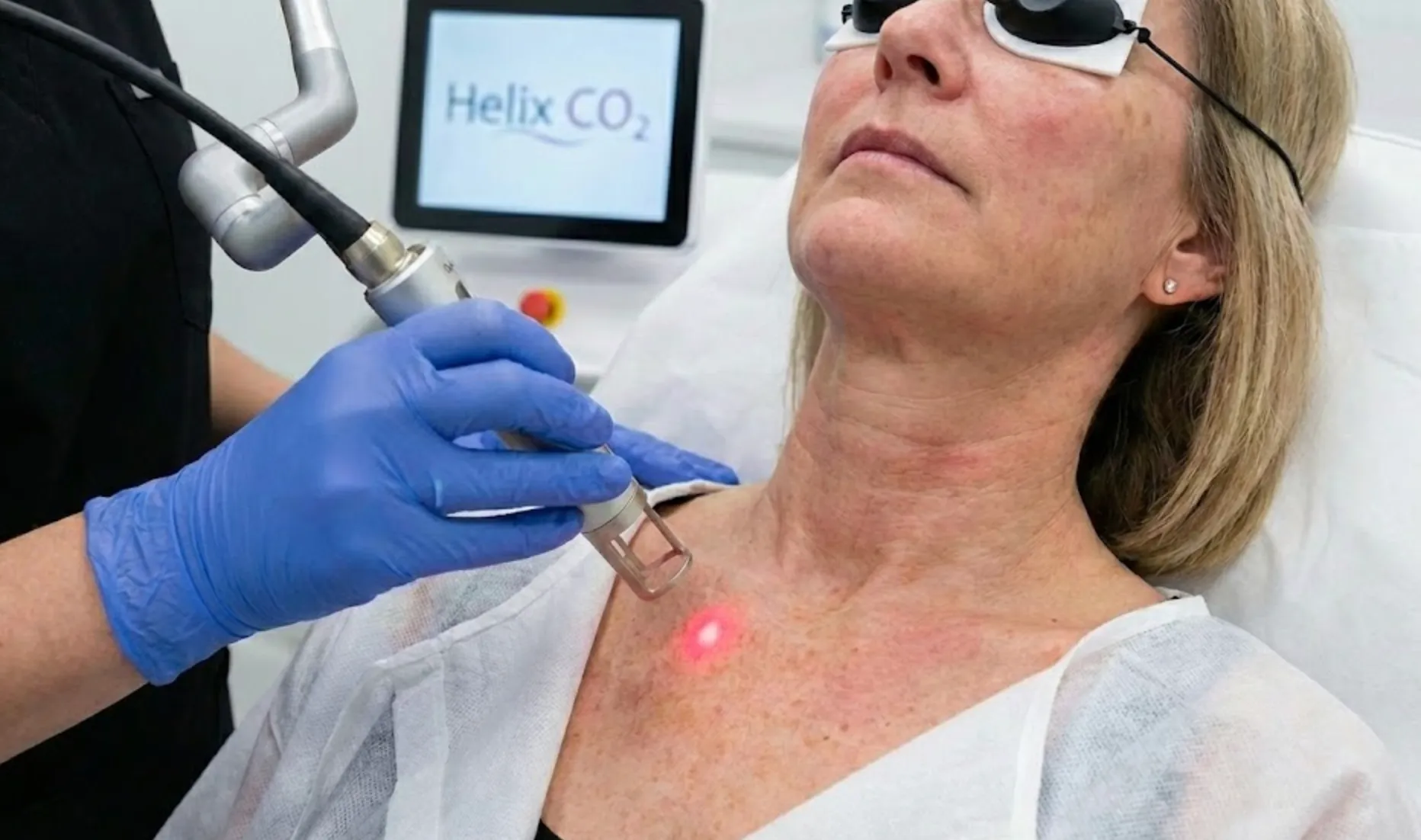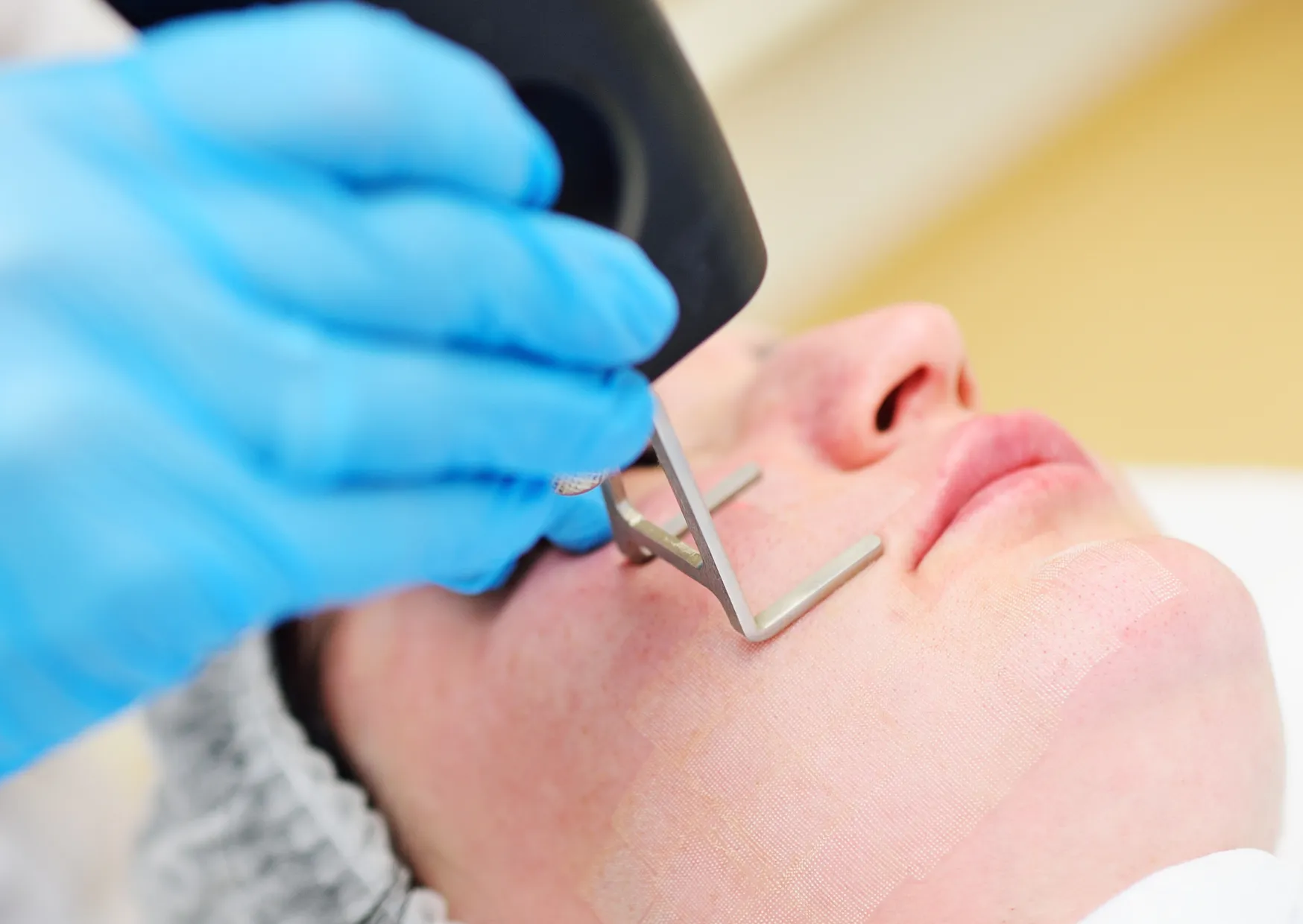
When you choose to undergo CO₂ laser resurfacing, especially with an advanced system like the HELIX CO₂ Laser, you’re signing up for dramatic skin renewal. But great results come with a recovery journey.
Understanding what’s normal, what’s expected, and how to care for your skin day by day can make that journey smoother, more comfortable, and more rewarding.
Why recovery matters: the trade‑off between powerful results and temporary downtime
Laser resurfacing using CO₂ energy works by precisely vaporizing layers of damaged skin and stimulating deep collagen remodeling. The deeper the treatment (ablative modes), the more dramatic and long‑lasting the results, but also the more intense the healing process. The HELIX CO₂ platform lets us modulate that depth via options like CoolPeel®, Sultra™, and Fusion™, helping reduce downtime while preserving efficacy.
Because we’re triggering a controlled wound response, your skin must pass through predictable phases (initial injury, inflammation, peeling, regeneration) and your behavior (aftercare, sun protection, hydration) strongly influences your comfort and the final result.
The timeline below assumes a moderate to deeper CO₂ session (not ultra‑light touch). If your provider does a very superficial “light” resurfacing, your recovery may compress by a few days.
Pre‑treatment tips to set yourself up for a smoother recovery
Before Day 0 even arrives, you can make choices that help your skin heal:
- Hydrate internally and externally: Drink plenty of water in the week before treatment. Use a gentle, non‑irritating moisturizer in advance.
- Avoid certain skin actives: Stop retinoids, strong exfoliants (AHA, BHA), and anything irritating at least 5–7 days before.
- Tell your provider about supplements / medications: Some blood thinners or herbs may increase bleeding risk.
- Plan downtime: Arrange your schedule so the first week (at least the first 3–5 days) is as flexible and low‑stress as possible.
- Stock your aftercare supplies: Think sterile saline, bland emollients, petroleum jelly (if recommended), gentle cleanser, sunscreen (when ready), and soft gauze or dressings.
- Have someone available: On the day of treatment, you may prefer someone to drive you or assist you home.
Day 0: Immediately after (hours 0–6): crusting, tightness, and doing nothing but rest
Your treatment session is complete.
In the hours right afterward:
- Expect your skin to feel hot, tight, and stinging.
- You may notice pinpoint bleeding, oozing, or weeping.
- Your provider will typically apply a protective ointment or dressing.
- Avoid touching or rubbing your skin.
- Stay cool, rest, and keep your head elevated.
The first few hours are delicate. Your priority is to let the skin settle without interference.
Day 1: Swelling and redness peak, gentle cleaning begins
By the next morning:
- Expect continued swelling, redness, and heat. Many patients say Day 1 is tougher than Day 0.
- You may have puffiness or edema, especially around the eyes or lower face.
- Your provider will typically instruct you to begin gentle cleansing (often with sterile saline or a very mild non‑soap cleanser) and to reapply ointment or barrier cream frequently.
- Avoid makeup, exfoliants, and active products.
- Sleep a bit propped up and try to avoid bending over or heavy lifting, which can exacerbate swelling.
During Day 1, the goal is to keep the skin clean, glazed with protective ointment, and undisturbed.
Day 2: The “ugly duckling” stage begins: crusting, flaking, and discomfort
By Day 2, the healing process becomes more visible:
- You’ll likely start to see fine crusting or scabbing, sometimes looking patchy or mottled.
- The skin may feel tight, itchy, or mildly uncomfortable, but resist the urge to scratch.
- Continue your gentle cleansing + ointment regimen, typically every few hours (as instructed).
- You can sleep with soft, breathable coverings (sterile gauze) if advised, to protect the skin overnight.
- Pain is usually mild to moderate, your provider may prescribe or recommend over‑the‑counter pain relief (e.g. acetaminophen, ibuprofen) unless contraindicated.
- Drink plenty of fluids, eat a soft, anti‑inflammatory diet, and avoid strenuous activity.
This is often the least visually appealing phase. But know it’s temporary.
Day 3: Peeling becomes more obvious, and your skin may look patchy
By Day 3 you’ll notice:
- More pronounced peeling, flaking, or sloughing, and some patches may lift off slightly (but not large pieces).
- You may detect texture changes under the crust, or see some pinkish new skin beneath.
- Your skin may be more sensitive to air, movement, or fabric so wear loose, soft clothing and sleep on fresh pillowcases.
- Continue cleansing + protective balm, but be extra gentle. Use only what was prescribed.
- Avoid heat, sweat, and prolonged sun exposure.
- You may feel emotional about how you look since skin often appears red, uneven, and raw during this phase. That’s normal.
- If any areas feel overly painful, weepy, or hot (signs of infection), alert your provider immediately.
At this point, your body is inching toward renewal under that thin crust.
Day 4: Most of the crusting softens and begins to lift
By Day 4:
- Crusting should be softer, thinner, and smaller in scale. Some scabs may come off on their own (never forcibly peel).
- You might see areas of fresh, pink new skin which is delicate, sensitive, and vulnerable.
- Some dryness, tightness, and mild itching continue.
- You can often reduce the thickness of ointment layers slightly, switching to lighter hydration if advised.
- Continue gentle cleansing and protection.
- You may cautiously resume very light, non‑irritative moisturizer under your provider’s watch.
- Sunscreen still is off limits directly to the healing area unless instructed otherwise; for now, shade and physical barriers (wide‑brim hat, scarf) are safer.
By now the worst of the crusting is receding; you’re headed toward regeneration.
Day 5: More peeling and the appearance of fresh skin
By Day 5:
- Much of the crusting is likely gone or nearly gone, and new, delicate pink skin is more evident.
- Some residual peeling or fine flaking may continue.
- You may feel mild tightness or mild sensitivity in some areas, but still avoid stretching or pulling motions.
- Your daily care will shift more toward hydration (bland, non‑fragrance moisturizers) and barrier repair.
- If your provider approves, you might introduce a very mild (nonactive) cream or barrier serum, but only in limited amounts.
- Continue to protect the skin from sun and irritants.
Day 6: Pinkness persists but texture softens, healing continues
By Day 6:
- Your new skin will remain pink or rosy, but gradually stabilize.
- Texture should become smoother as the last vestiges of crusting fall away.
- Discomfort or tightness usually diminishes significantly.
- Moisturizing becomes more comfortable and less “slippy” (less need for heavy bland ointments).
- Some very gentle, healing serums (like growth factors or peptides) might be introduced if your provider approves.
- You can begin applying mineral-based physical sunscreens lightly to the outermost edges (if recommended), but avoid aggressive chemical sunscreens until full healing.
- Stay cautious in terms of sun, heat, friction, swimming, or sweating.
You’re nearly through the worst stretch. The real payoff begins now.
Day 7: One week in: visible improvement and more confidence
By Day 7:
- Most crusting or peeling should be resolved. What remains is fresh, pink skin with a softer, more even texture.
- Any scabs or flaking are minimal.
- You may see initial improvements in tone, fine lines, and smoothness.
- Many people feel confident going back into light public settings (indoors, minimal makeup), but still avoid heavy makeup, intense workouts, and sun exposure.
- Moisturization, gentle cleansers, and sun protection remain your core routine.
- You may begin layering very mild products, per your provider’s guidance.
- Expect that redness (rosacea‑type pinkness) may linger for another week or two.
While Week 1 is mostly behind you, your skin is still in a vulnerable remodeling phase.
Days 8–14: Continued fading of redness and strengthening of new skin
From Day 8 through Day 14:
- Pinkness gradually fades toward more natural tone.
- You may see mild peeling or dry patches at edges or in recessed areas, you can manage those with gentle lubrication.
- Texture continues improving and crepey skin gradually smooths.
- You can begin gradually reintroducing your normal skincare regimen, but only non‑irritating, gentle formulations (no retinoids, no acids, no aggressive actives yet).
- Sun protection becomes paramount.
- You may use mineral makeup (if cleared by your provider), applied gently.
- Be alert for spots that seem overly red, raised, or scabbed (possible delayed reaction or infection) and report anything unusual.
- Hydration, sleep, and nutrition continue to support regeneration.
At around two weeks, many patients feel and see enough confidence to fully resume many of their usual routines with care.
Weeks 3–4: Fading of residual redness and remodeling
Once you enter Weeks 3 and 4:
- Red or pink areas continue to fade and some patients describe lingering “rosy glow” that softens over time.
- Skin barrier strengthens and you’ll notice less sensitivity, more resilience.
- You may start using gentle retinoids or exfoliants (low strength) if cleared by your provider, but only cautiously and gradually.
- Pigment irregularities, if present, often continue to settle.
- You’ll see incremental improvements in firmness, tone, pore size, and smoothness.
- Make sun protection nonnegotiable.
- Consider gentle antioxidant serums, peptides, or supportive skincare (as your provider prescribes) to support collagen remodeling.
The bulk of visible recovery is done; the rest is refinement and optimization.
Month 2 and beyond: Full maturation and ongoing renewal
From Month 2 forward:
- Residual redness will gradually fade to your normal baseline, but some minimal “pinkness” may linger for a bit in deeper treatments.
- Collagen remodeling continues for 3–6 months or more, gradually thickening and reinforcing skin.
- You’ll observe improvements in tone, firmness, pore size, fine lines, and skin clarity.
- Final results become clearer as downtime fades into your natural radiance.
- You can resume your full skincare arsenal (retinoids, actives, peels) under guidance.
- Maintain consistent sun protection, avoid smoking, and support skin health via sleep, diet, and hydration.
- Often a second “touch‑up” or maintenance session is considered, the HELIX system sometimes recommends two to three treatments for optimal results.
Common side effects you may see (and when to worry)
Throughout the recovery period, you may experience:
- Redness, swelling, warmth
- Peeling, flaking, crusting
- Mild stinging, tingling, or itchiness
- Mild oozing or thin exudate
- Temporary darkening of crusts before shedding
These are all normal. What’s not normal (and should prompt contacting your provider) includes:
- Excessive pain or throbbing that doesn’t respond to analgesics
- Persistent or spreading heat/redness (possible infection)
- Pus, foul odor, or thick drainage
- Open wounds or persistent bleeding beyond 3 days
- Emergence of white or gray patches under crusts
- Scarring, pigment changes that worsen rather than improve
If any of the above arise, your provider needs to evaluate you.
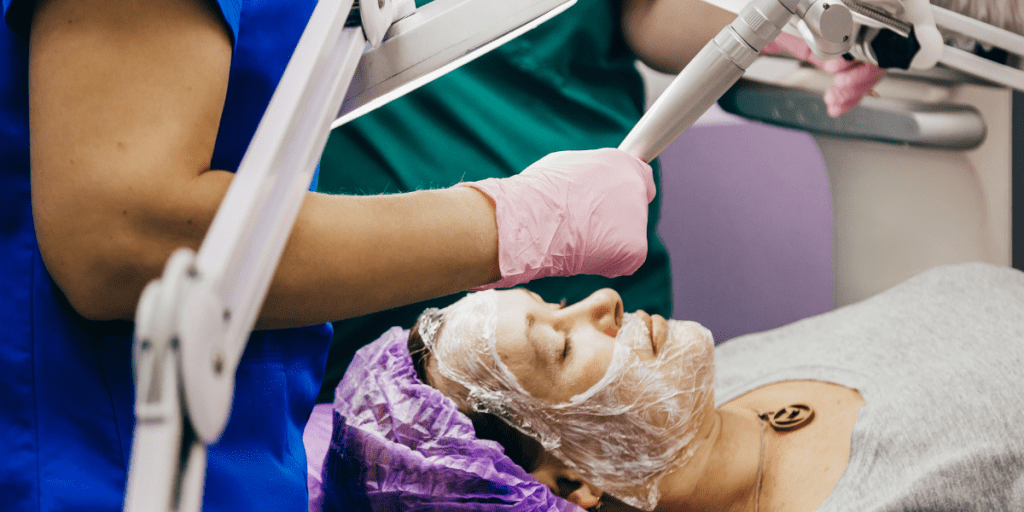
Gentle skincare (and lifestyle) practices that support recovery
Here’s a curated checklist of behaviors that optimize healing:
- Cleansing: Use only the gentle, non‑soap cleanser or sterile saline your provider recommends.
- Hydration & moisture: Keep the surface moist with bland emollients, nothing perfumed, nothing irritating.
- Barrier repair: Use barrier creams or petrolatum as directed.
- Sun avoidance: Until fully healed, rely on shade, hats, sunglasses, and UV filtering clothing.
- Sunscreen: Begin only when cleared, using mineral (zinc oxide / titanium dioxide) first.
- Avoid heat and sweating: Skip saunas, strenuous workouts, hot showers, and anything that causes heavy perspiration early on.
- Avoid makeup and friction: Don’t apply makeup onto raw skin; wear soft clothing, use clean pillowcases.
- Sleep: Prioritize restful, elevated sleep to reduce swelling.
- Nutrition: Stay hydrated, eat protein and antioxidant rich foods, avoid inflammatory foods.
- No picking: Never peel, scratch, or pick at crusts or flaking, let your skin do its own shedding.
- Follow all instructions: If prescription antibiotics, topical treatments, or vitamin C / growth factors are part of your protocol, stick closely to them.
How your results evolve over time
Your skin’s transformation is gradual and cumulative:
- Immediately post-treatment: fresh wound, raw surface
- Week 1: shedding of damaged layers, emergence of delicate new skin
- Weeks 2-4: maturing new skin, fading of redness, smoothing of texture
- Months 2-6+: continued collagen remodeling, thickening, improved tone, firmness, and refined texture
Most clients first notice smoother texture and tighter appearance within the first month or two. The deeper benefits such as reduced fine lines, improved tone, and a more youthful glow continue to evolve for months.
Emotional and psychological considerations you may face
Beyond physical healing, many clients go through emotional or psychological phases:
- Shock or “mirror dissonance”: In early days, your reflection may feel “alien” or worse than expected. This often resolves as healing progresses.
- Anxiety about results: Will it look good? How long will redness last? These concerns are normal.
- Impatience or regret: Because visible progress takes time, it’s common to feel restless or discouraged midweek. Stay focused on the bigger goal.
- Excitement creeping in: As new skin appears, the excitement over your radiant transformation often grows.
- Increased self‑confidence over time: When the glow deepens and texture improves, many clients feel renewed pride in their skin.
Talk with our provider or aesthetic team if you feel uneasy or uncertain at any stage, we are here to support your comfort, physically and emotionally.
Tips from our team at iBeauty Med Spa for smoother recovery
Here are a few extra pointers distilled from our experience:
- Use cool compresses (sterile, soft cloths dipped in chilled saline) for short periods to ease swelling, but don’t overdo it or cause chill.
- Avoid aspirin or NSAIDs beyond what your provider allows (some may interfere with healing).
- Use a humidifier in your room to prevent excessive air dryness.
- Keep your environment clean (clean pillowcases, towels, no pets rubbing against treated areas).
- If you wear glasses, make sure they rest gently, not press hard on delicate healing skin.
- Avoid swimming, hot tubs, steam rooms, or chlorinated water until your skin is fully healed.
- Keep your head elevated while sleeping (extra pillows) to reduce swelling in face/neck areas.
When to follow up and how to plan maintenance
We recommend you schedule your follow-up visits around:
- 1 week post-procedure to check that healing is progressing well
- 1 month post-procedure to assess your visible results
- 3–6 months (or as advised) to evaluate ongoing remodeling and consider maintenance or touch‑ups
If you’d like to book an appointment or consultation, you can go to our scheduling page here.
Final thoughts: patience, care, and trust the process
Recovery after CO₂ laser resurfacing is a journey, a collaboration between your body’s innate healing capacity and the science and artistry of your aesthetic provider.
You may pass through phases of discomfort, rawness, and visible crusts, but with patient care and consistent protocol, that process gives way to renewed, glowing, youthful skin.
If you ever feel uncertain about redness, pain, texture, or anything, reach out to your iBeauty Med Spa team immediately. We’re here to support, reassure, and guide you.
Let your post-treatment period be a time of nurturing, rest, and optimism. The results are worth the effort.
When you’re ready to transform your skin, we’d love to work with you, learn more about the HELIX CO₂ Laser here, and schedule your next visit using our booking link.
Be kind to your skin. You’ve got this.