CO2 laser resurfacing, chemical peels, and IPL photofacials are popular med spa treatments that address aging and sun damage through distinct methods. Choosing the right one depends on matching your specific skin needs to the correct mechanism.
Patients are often overwhelmed by conflicting marketing claims, ranging from dramatic resurfacing to no-downtime refreshes. Beyond the promises of erased spots and broken capillaries, the fundamental question remains: what does your skin actually require?
Why These Three Treatments Get Compared
CO2 laser, chemical peels, and IPL occupy the same conversation because they all promise rejuvenated, more youthful skin. They are also the treatments most patients consider first, before exploring injectables or energy-based tightening. The comparison is natural, and so is the confusion, because the three sit at very different points on the spectrum of intensity.
Think of them less as competitors and more as instruments of different strength. One is built for deep correction. One is endlessly adjustable. One is precise about a single category of concern. The right starting point is understanding what each one is engineered to do.
How CO2 Laser Resurfacing Works
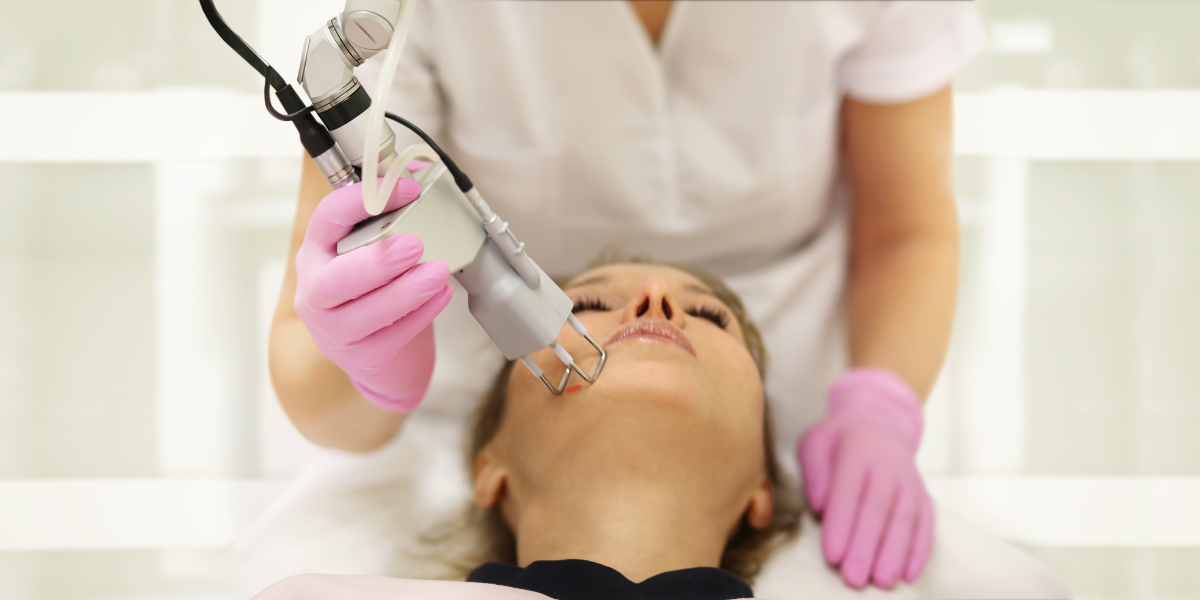
CO2 laser resurfacing is the most powerful of the three treatments and the most transformative. A carbon dioxide laser delivers concentrated beams of light that the water in your skin absorbs almost instantly. That absorption vaporizes the outermost damaged layers and sends controlled heat into the dermis below.
Two things happen as a result. The surface sheds its weathered top layer and reveals fresher skin underneath. The deeper heat triggers a wound-healing response that ramps up collagen and elastin production for months afterward. This is the reason CO2 results keep improving long after the skin has visibly healed.
Modern systems are fractional, which means the laser treats the skin in a grid of microscopic columns rather than removing the entire surface at once. The untreated skin between those columns acts as a reservoir of healthy tissue that speeds recovery. The Helix CO2 platform allows the provider to dial treatment depth and intensity to the specific concern, from a light refresh to a deeper corrective pass.
CO2 laser excels at the concerns that lighter treatments struggle to touch: deep wrinkles, acne scars, advanced sun damage, rough texture, and laxity. When skin needs genuine structural change rather than a surface polish, this is the category that delivers it.
What the research shows In a clinical study on skin rejuvenation, a fractional CO2 laser produced roughly a 63 percent improvement in skin texture two months after treatment, along with measurable gains in firmness. That depth of remodeling is what separates ablative laser resurfacing from gentler options. |
For a closer look at the device and what a session involves, our page on CO2 laser resurfacing in Sylvania and Bloomfield Hills walks through the process in detail.
How Chemical Peels Work
Chemical peels rejuvenate the skin through controlled exfoliation. A solution of acids is applied to the surface, where it dissolves the bonds holding dull, damaged cells in place. Those cells lift away over the following days, and the skin underneath responds by producing a fresher, more even layer.
Peels come in a wide range of strengths, and that range is their greatest asset. A light peel using glycolic or lactic acid works at the surface and leaves skin glowing within a day. A medium-depth peel reaches further into the epidermis to address pigmentation and early fine lines. Deeper formulations push into the upper dermis for more pronounced correction.
Because the provider selects the acid, the concentration, and the number of passes, a peel can be calibrated with remarkable precision. A patient who wants a no-downtime brightening treatment before an event and a patient who wants to fade stubborn melasma can both be served by a peel, simply at different intensities.
Peels are particularly strong for uneven tone, mild pigmentation, dullness, congestion, and the earliest fine lines. They also pair beautifully with a consistent skincare routine, since regular light peels keep cell turnover brisk and help active ingredients absorb more effectively.
Our chemical peels in Sylvania and Bloomfield Hills range from gentle brightening blends to medium-depth corrective formulas, chosen during consultation based on your skin type and goals.
How IPL Photofacials Work
IPL, short for intense pulsed light, treats skin by targeting color rather than texture. The device emits a broad spectrum of light that travels harmlessly through the skin surface until it meets a pigment. Brown spots absorb it. The hemoglobin inside broken capillaries absorbs it. That captured energy heats the unwanted pigment, which then breaks down and clears.
The visible result is striking on the right candidate. Sun spots darken briefly, then flake away over the following week. Diffuse redness and small visible vessels fade. The overall complexion looks clearer and more uniform, as though years of accumulated sun exposure have been quietly edited out.
IPL works on color, which makes it the standout choice for the brown-and-red discoloration that makes skin look aged and tired, and it has less effect on deep wrinkles or scarring. For patients in their thirties and forties whose main complaint is sun damage and uneven tone rather than lines, it is often the most satisfying option of the three.
Treatment usually comes as a short series spaced a few weeks apart, with minimal interruption to daily life. Our IPL photofacial in Sylvania and Bloomfield Hills uses the Lumecca system, one of the most powerful IPL platforms available for pigment and vascular concerns.
CO2 Laser, Chemical Peels, and IPL at a Glance
The table below puts the three treatments side by side so the differences are easy to see at a glance.
Factor | CO2 Laser | Chemical Peel | IPL Photofacial |
|---|---|---|---|
How it works | Vaporizes surface layers and heats the dermis | Acids exfoliate damaged surface cells | Light energy targets pigment and redness |
Best for | Deep wrinkles, scars, advanced sun damage, laxity | Dullness, uneven tone, mild pigment, early lines | Sun spots, brown spots, redness, broken capillaries |
Intensity | High | Adjustable from light to deep | Low to moderate |
Typical downtime | 5 to 7 days of redness and peeling | None to several days, depending on depth | Little to none, brief darkening of spots |
Sessions needed | Often one, sometimes two | One for a glow, a series for correction | Usually a series of 3 to 5 |
Results timeline | Builds over 3 to 6 months | Days to a few weeks | Progressive across the series |
Matching the Treatment to Your Skin Concern
The clearest way to choose is to start with the concern that bothers you most, then work backward to the treatment built for it.
If your reflection shows deep lines, etched expression creases, acne scarring, or skin that has lost its firmness, CO2 laser resurfacing has the reach to make a real difference. Lighter options can soften these concerns slightly, but they cannot rebuild structure the way ablative laser energy can.
If your skin looks generally healthy yet dull, congested, and slightly uneven, a chemical peel is usually the smartest and most cost-effective starting point. Peels refresh tone and texture without committing you to significant recovery time.
If brown spots, sun damage, and redness are the features you notice first, IPL is purpose-built for exactly that. It clears discoloration that peels only partially reach and that lasers may treat with more aggression than the concern warrants.
A couple of practical points are worth keeping in mind:
- Skin tone matters. IPL and deeper laser treatments require careful settings on richer skin tones, and some cases are better served by alternatives such as microneedling. A consultation always comes first.
- Sun exposure changes the plan. Recent tanning, whether from the sun or a bottle, can delay any of these treatments, so booking your appointment for a low-sun stretch protects both your safety and your result.

What Downtime Really Looks Like
Recovery is often the deciding factor, and honest expectations prevent disappointment.
CO2 laser asks the most of you. Expect five to seven days when the skin is visibly red, swollen, and flaking as it sheds and renews. Most patients plan this around a week away from social events. The trade-off is that a single session can accomplish what several gentler treatments cannot.
Chemical peels span the full spectrum. A light peel may leave nothing more than a day of mild flaking that makeup easily covers. A medium-depth peel can bring three to five days of visible peeling. You choose the intensity, and the recovery scales with it.
IPL is the gentlest of the three. Treated brown spots darken into a coffee-ground texture for several days before flaking off, and any redness usually settles within hours. Most patients return to work the same day.
The pattern is consistent. Greater correction requires greater recovery, and the right choice depends on how much of each you are prepared to accept.
Can You Combine Them?
These treatments are not rivals so much as different instruments in the same kit, and experienced providers frequently sequence them for a more complete result.
A common strategy is to clear surface discoloration with a course of IPL, then address texture and lines with a peel or a laser once the pigment is gone. Patients focused on long-term skin quality might alternate seasonal peels with an annual laser treatment. For those whose primary concern is laxity alongside texture, Morpheus8 RF microneedling can be layered into the plan to tighten skin from a deeper level.
The key is sequencing and spacing. Stacking aggressive treatments too closely overwhelms the skin barrier. A thoughtful plan, mapped out during a professional skin analysis, spaces each treatment so the skin has time to heal and benefit fully.
How to Make the Right Choice
Choosing well comes down to honesty about two things: the concern you most want corrected, and the amount of downtime you can realistically accommodate. Once those two answers are clear, the treatment usually selects itself.
A simple way to hold the decision in mind: IPL is the answer when the problem is color, and a chemical peel is the answer when the skin simply needs everyday renewal and glow. CO2 laser is the choice reserved for deep, structural change. When more than one of these concerns is in play, a layered plan built during consultation almost always outperforms a single treatment chosen in isolation. |
Frequently Asked Questions
Which of the three gives the most dramatic results?
CO2 laser resurfacing produces the most pronounced change, because it works at the deepest level and triggers months of collagen remodeling. That power comes with the longest recovery, which is why it is matched to concerns that genuinely need structural correction.
How do I know which one my skin actually needs?
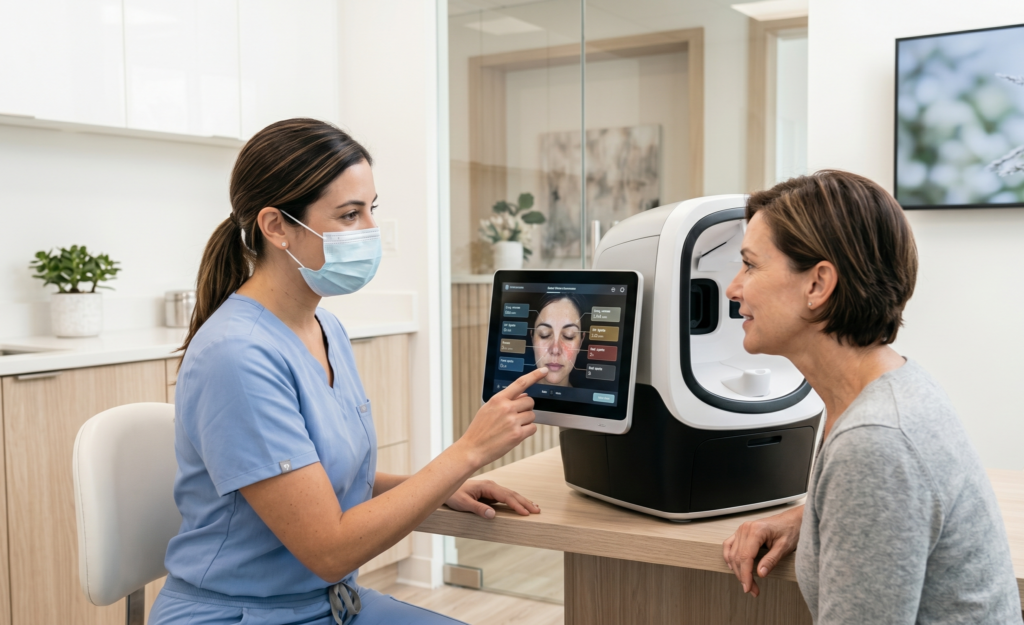
The most reliable answer comes from an in-person assessment. A professional skin analysis evaluates your tone, texture, pigment, and laxity, then matches those findings to the treatment, or combination of treatments, built to address them.
Can I wear makeup afterward?
It depends on the treatment. After IPL or a light peel, most patients can wear makeup within a day. After a medium peel or CO2 laser, the skin should be left bare while it sheds and heals, usually for several days.
How long do the results last?
Results from all three are long-lasting yet not permanent, because skin keeps aging and accumulating sun exposure. CO2 laser results can last for years with diligent sun protection. Peels and IPL are typically maintained with periodic sessions.
Is one treatment safer than the others on darker skin tones?
Each can be performed safely across a range of skin tones when settings and formulations are chosen correctly, though richer skin tones call for extra care with IPL and ablative laser. A consultation determines the safest path, which sometimes means an alternative such as microneedling.
Will I need more than one session?
CO2 laser often achieves its goal in a single session. Chemical peels can be a one-time glow treatment or a corrective series. IPL is usually planned as a short series for the fullest clearing of pigment and redness.
Final Thoughts
CO2 laser, chemical peels, and IPL are not interchangeable, and that is a good thing. Each one is engineered for a specific job, which means there is a precise, well-matched answer for almost every skin concern. The mistake patients make is choosing a treatment by reputation rather than by fit.
At iBeauty Medical, every recommendation starts with your skin rather than a menu. We assess what you are working with, listen to what you want to change, and design a plan around the treatment, or sequence of treatments, that will get you there with the least guesswork.
If you are ready to find out which approach suits your skin, book a consultation with our team in Sylvania or Bloomfield Hills.