

You sleep eight hours, drink plenty of water, wear sunscreen, and still look tired. The hollows beneath your eyes refuse to cooperate. Concealer helps for an hour or two before it settles into the creases and makes things look worse.
This is one of the most common frustrations patients bring into consultation. Under-eye hollows, dark shadows, and sunken tear troughs create a fatigued appearance that has nothing to do with how much rest you are actually getting. The cause is structural: a loss of volume beneath the lower eyelid that no topical product can replace.
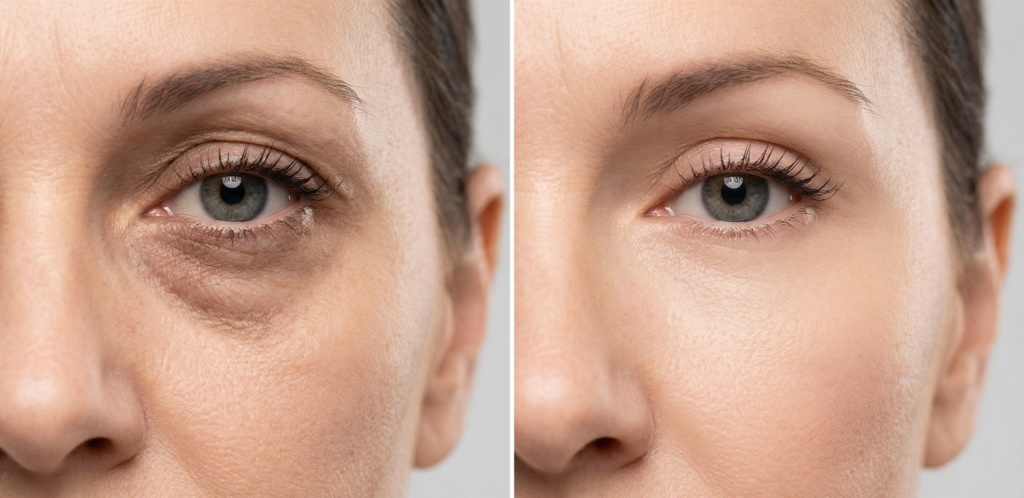
Tear trough filler is the most effective non-surgical treatment for this concern. Using a carefully placed dermal filler, your provider restores the volume that time, genetics, or both have taken away. The result is a smoother transition between the lower eyelid and cheek, reduced shadowing, and a naturally refreshed appearance that looks like you, only more rested.
What the tear trough is and why it hollows
The tear trough is the crease that runs from the inner corner of the eye diagonally toward the upper cheek. In a youthful face, this area is smooth and well supported by a combination of fat pads, collagen, and the underlying orbital bone. The transition from lower eyelid to cheek is seamless, and the under-eye area catches light evenly.
As we age, several things happen simultaneously. The fat pads beneath the eyes thin and descend. The skin loses collagen and becomes more translucent. The orbital bone itself can resorb slightly, creating a deeper hollow where volume used to sit. The ligaments that tether the skin to the bone become more prominent as the surrounding tissue thins, making the crease appear deeper and more defined.
The result is a shadow. Not a shadow created by pigment or poor circulation, but a physical shadow cast by the depression itself. This is why no eye cream, no matter how well formulated, can fix a true tear trough hollow. The problem is not on the surface. It is underneath.
Genetics play a significant role as well. Some patients develop noticeable tear troughs in their twenties or early thirties, well before aging would typically be a factor. In these cases, the anatomy was simply predisposed to a thinner, less cushioned under-eye area from the start.
How tear trough filler works
Tear trough filler addresses the hollow by replacing lost volume directly beneath the skin. The filler most commonly used in this area is hyaluronic acid, a soft gel that occurs naturally in the body. Hyaluronic acid attracts and holds moisture, which helps the filler integrate smoothly with the surrounding tissue and produce a natural look.
The filler is placed deep, at or near the periosteal level (against the bone), beneath the orbicularis oculi muscle. This depth is critical. Superficial placement in the under-eye area increases the risk of visible lumps, a bluish discoloration called the Tyndall effect, and an unnatural, puffy appearance. Deep, precise placement produces a smooth contour that looks like restored anatomy rather than an injected product.
Most patients require less than one full syringe to treat both eyes. The goal is conservative correction. Slight underfilling at the first appointment is intentional, because the filler hydrates and expands slightly over the first week. Your provider can add more at a follow-up visit if needed. Overfilling this area is far more problematic than underfilling, and experienced injectors always err on the side of restraint.
Product selection also matters. Not all hyaluronic acid fillers are the same. The under-eye area requires a filler with a soft, smooth consistency and a low G-prime value, meaning it is pliable rather than firm. Thicker fillers designed for cheekbones or jawlines can look lumpy or feel rigid in this delicate zone. Your provider will choose a product specifically suited to the thin, sensitive skin beneath the eyes.
Who is a good candidate
Tear trough filler works best for patients with a specific type of under-eye concern: volume loss that creates a visible hollow or shadow beneath the lower eyelid. The ideal candidate has mild to moderate tear trough depth, reasonable skin thickness, and realistic expectations about what filler can achieve.
Patients who notice that their dark circles worsen with weight loss, aging, or fatigue tend to respond well because the underlying issue is structural. The filler restores what was lost and the shadows disappear.
Good candidates typically present with:
A visible hollow or depression beneath the lower eyelid. Dark circles that are caused by shadowing rather than pigmentation. Adequate skin thickness to conceal the filler beneath. A desire for subtle, natural improvement rather than dramatic change.
This treatment may not be ideal if you have:
Significant under-eye puffiness or fat herniation (bags caused by protruding fat). Very thin, crepey skin that may not conceal filler well. Dark circles caused primarily by hyperpigmentation rather than volume loss. Severe skin laxity that requires surgical correction.
A thorough consultation will clarify which category your concern falls into. Sometimes the best outcome involves addressing adjacent areas first, or combining filler with other treatments to achieve a balanced result.
What the appointment looks like
The treatment itself is faster and more comfortable than most patients expect.
Preparation
Your provider examines the under-eye area in detail, assessing skin thickness, the depth of the hollow, and how the tear trough relates to the midface. You may be asked to look up, look down, and smile so the provider can evaluate the area in motion. This assessment determines whether filler alone is sufficient or whether the cheeks should be addressed first to provide structural support.
Patients who want to minimize bruising can avoid blood-thinning supplements like fish oil, vitamin E, and aspirin for several days before the appointment. A topical numbing cream is applied to the under-eye area approximately 15 minutes before treatment begins.
The injection process
Most experienced providers use a blunt-tipped cannula rather than a needle for tear trough treatment. The cannula enters through a single tiny entry point on each side and glides beneath the skin to deposit filler along the trough. This technique significantly reduces bruising, swelling, and the risk of vascular injury compared to a multi-needle approach.
The entire injection process takes 10 to 20 minutes. Patients feel pressure and mild pushing beneath the eye but typically describe the discomfort as very manageable. Your provider will show you your progress with a mirror during treatment and check symmetry before finishing.
Immediately after
You can return to normal activities right away. Some swelling is expected and is most noticeable the first morning after treatment. Bruising, if it occurs, is usually minor and resolves within a week. Cold compresses during the first 48 hours help minimize both.
The filler settles and integrates over the following one to two weeks. The final result is not what you see walking out of the office. Patience during this settling period is important, because initial swelling can temporarily make the area look fuller than the intended outcome.
How tear trough filler compares
Treatment | Best for | Downtime | Duration of results |
HA filler (tear trough) | Volume loss and hollowing | Minimal (1 to 3 days of mild swelling) | 12 to 18 months on average |
PRP (platelet-rich plasma) | Skin quality and mild hollowing | Minimal (bruising possible) | Gradual improvement over months |
RF microneedling | Skin tightening and texture | 2 to 5 days of redness | Progressive with multiple sessions |
Lower blepharoplasty (surgery) | Fat herniation, excess skin, severe hollowing | 1 to 2 weeks recovery | Long-lasting (years) |
For patients with mild skin laxity around the eyes, Morpheus8 or Forma can complement filler by improving skin tightness and texture in the surrounding area. Filler addresses the hollow. Skin tightening addresses the envelope.
The risks you should understand
Tear trough filler is safe when performed by an experienced injector, but the under-eye area is one of the most technically demanding zones on the face. The skin is thin. The vascular anatomy is complex. The margin for error is narrow. Honest discussion of risk is part of responsible care.
Swelling and bruising. The most common side effects. Typically mild and self-resolving within a few days to a week. Cold compresses and sleeping slightly elevated help.
The Tyndall effect. A bluish discoloration that can occur if filler is placed too superficially in this thin-skinned area. It is correctable with hyaluronidase (an enzyme that dissolves hyaluronic acid filler) but is best prevented through proper depth of injection.
Lumpiness or asymmetry can result from overfilling, incorrect placement, or filler migration. This is why conservative dosing and deep placement are so important. An experienced provider will underfill slightly and bring you back for a touch-up rather than risk overcorrection.
The most serious but extremely rare complication is vascular occlusion, which occurs when filler enters or compresses a blood vessel. In the periorbital area, this carries a risk of vision impairment. Providers who perform tear trough treatment should have advanced knowledge of the regional vascular anatomy, use aspiration or cannula technique to reduce risk, and keep hyaluronidase immediately available as a reversal agent.
These risks are not reasons to avoid treatment. They are reasons to choose your provider carefully. Ask about their experience specifically with tear trough injections, their preferred technique (cannula versus needle), and whether they keep hyaluronidase on hand. A provider who discusses risks openly is a provider who takes your safety seriously.
Why the midface matters
One of the most common mistakes in tear trough treatment is treating the hollow in isolation without evaluating the cheek beneath it. The tear trough does not exist independently. It sits at the junction between the lower eyelid and the upper cheek. When the cheek has lost volume and descended, it pulls the under-eye area downward and deepens the trough from below.
In many patients, restoring volume to the midface with dermal filler provides structural support that lifts the entire under-eye region. Sometimes this alone is enough to improve the tear trough significantly. Other times, a small amount of filler in the trough itself, combined with midface volume, produces the most natural and long-lasting result.
This whole-face perspective is what separates a skilled injector from a provider who simply fills what the patient points to. At iBeauty Medical, we assess the entire periorbital and midface complex before placing a single drop of product.
How long results last
Hyaluronic acid filler in the tear trough tends to last longer than filler placed in more dynamic areas of the face. The under-eye area has relatively little movement compared to the lips or nasolabial folds, which means the filler breaks down more slowly.
Most patients enjoy their results for 12 to 18 months. Some retain visible improvement for even longer. A retrospective study of 155 patients who received tear trough filler found that significant results persisted up to 18 months after treatment, longer than the six to twelve month range manufacturers typically cite.
When the filler does begin to fade, the transition is gradual. You will not wake up one morning looking dramatically different. Most patients schedule a maintenance appointment once they notice the hollow starting to return, usually around the 12-month mark. Consistent maintenance with small amounts over time tends to produce better long-term results than waiting until the filler is completely gone and starting over from scratch.
Aftercare that protects your results
Recovery from tear trough filler is minimal, but the first few days matter for optimizing your outcome.
Avoid touching, pressing, or massaging the under-eye area for at least 48 hours unless your provider specifically instructs otherwise. Sleep on your back with your head slightly elevated for the first two nights to reduce morning swelling. Skip intense exercise for 24 to 48 hours, as increased blood flow and blood pressure can worsen swelling and bruising.
Avoid blood-thinning medications and supplements (aspirin, ibuprofen, fish oil, vitamin E) for several days after treatment if possible. Use acetaminophen if you need pain relief. Protect the area from sun exposure and apply a gentle, broad-spectrum sunscreen daily. A high-quality HydraFacial or mild chemical peel can be booked a few weeks after treatment to support overall skin health and radiance around the eyes.
Expect to see your final result approximately two weeks after treatment, once all swelling has resolved and the filler has fully settled.
When filler is not the answer
Not every under-eye concern is a filler concern. Honesty about this distinction is part of good clinical care.
If your dark circles are caused by hyperpigmentation, the discoloration is in the skin itself rather than a shadow cast by a hollow. Filler will not change the color of the skin. Topical brightening agents, gentle chemical peels, or laser treatments may be more appropriate.
If your primary issue is puffiness or visible bags caused by herniated orbital fat, adding filler beneath the bag can actually make the area look worse by increasing overall volume. These patients may benefit from skin tightening treatments or may ultimately need surgical evaluation.
If the skin beneath your eyes is extremely thin, crepey, or has significant laxity, filler alone may not produce the smooth, natural result you are hoping for. In these cases, combining filler with a collagen-stimulating treatment can improve the quality of the overlying skin while the filler addresses the volume beneath it.
Frequently Asked Questions
Does under-eye filler hurt?
Most patients find the treatment very tolerable. A numbing cream is applied before the procedure, and the use of a cannula rather than multiple needle sticks further reduces discomfort. You will feel pressure beneath the eye, but sharp pain is uncommon.
Can under-eye filler be reversed?
Yes. Hyaluronic acid fillers can be dissolved with an enzyme called hyaluronidase. If you are unhappy with your results or experience a complication, the filler can be broken down quickly. This reversibility is one of the key safety advantages of hyaluronic acid.
How much filler is typically needed?
Most patients require half a syringe to one full syringe total for both eyes. Conservative dosing produces the most natural results. Your provider may recommend starting with less and adding more at a follow-up appointment if needed.
Will the filler look obvious?
Not when placed correctly. The goal is restoration, not augmentation. Well-placed tear trough filler is invisible. People will notice that you look refreshed and well rested, but they will not be able to identify that you had filler.
Can I combine tear trough filler with other treatments?
Absolutely. Many patients pair tear trough filler with neurotoxin for crow’s feet, midface filler for cheek support, or Lumecca IPL to address pigmentation and skin tone around the eyes. Your provider can build a comprehensive plan based on your goals.
At what age should I consider tear trough filler?
There is no minimum age. Some patients develop noticeable tear troughs in their mid-twenties due to genetics. Others do not notice hollowing until their forties. The right time is when the concern bothers you enough to want it addressed.
Final Thoughts
The under-eye area is small, but its impact on how you look and feel is enormous. When the tear troughs are hollow, every mirror and every photograph reinforces the impression of fatigue. Restoring that lost volume changes the entire story your face tells.
Tear trough filler is one of the most rewarding treatments in aesthetic medicine when it is done well. The key is conservative technique, deep anatomical knowledge, and a provider who understands that less is almost always more in this delicate area.
At iBeauty Medical, we treat the under-eye area with the precision and restraint it demands. We assess your full facial structure, select the appropriate product, and place it at the correct depth to achieve a smooth, natural, lasting result.
If you are ready to say goodbye to tired-looking eyes, book a consultation with our team.