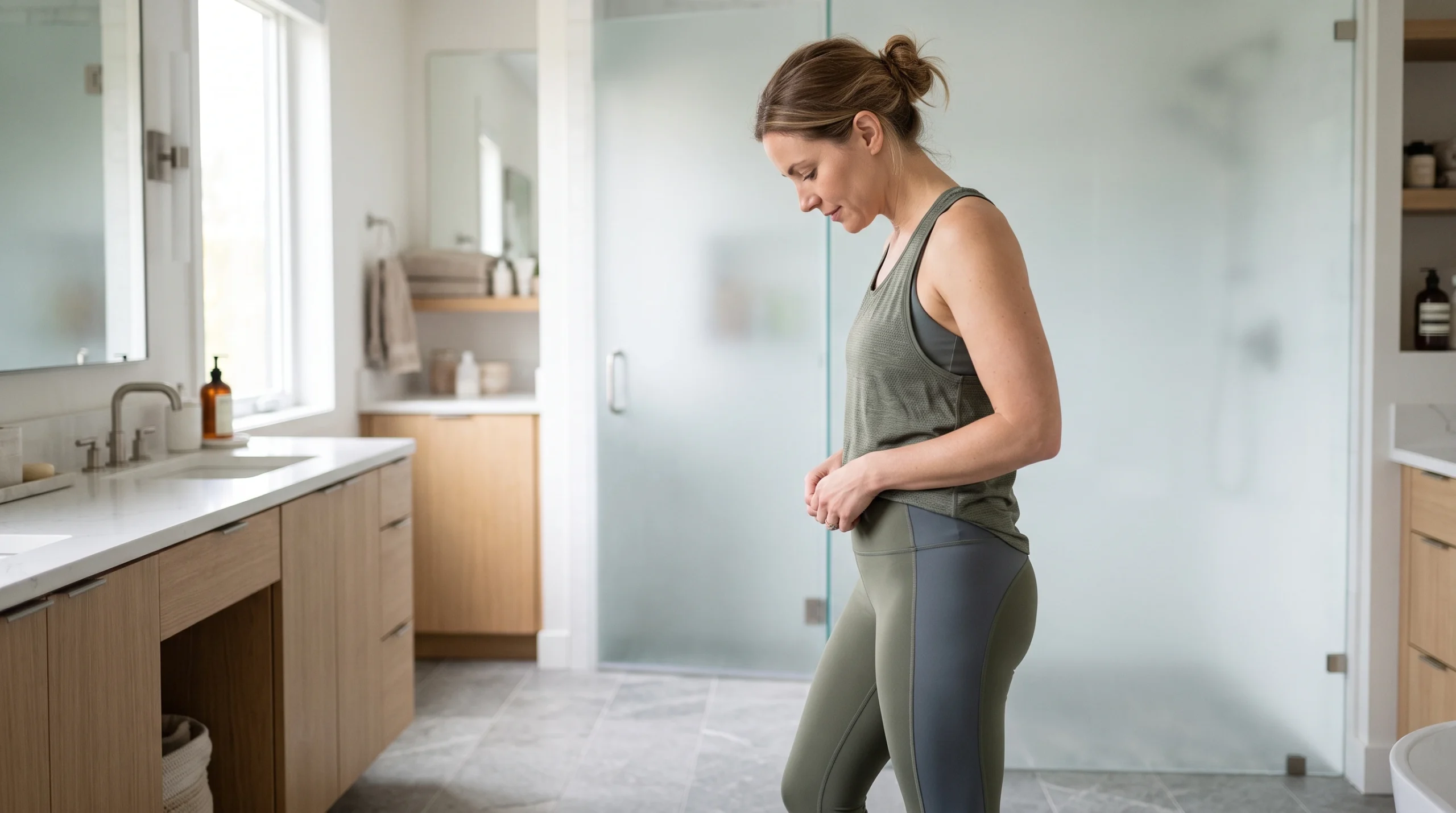
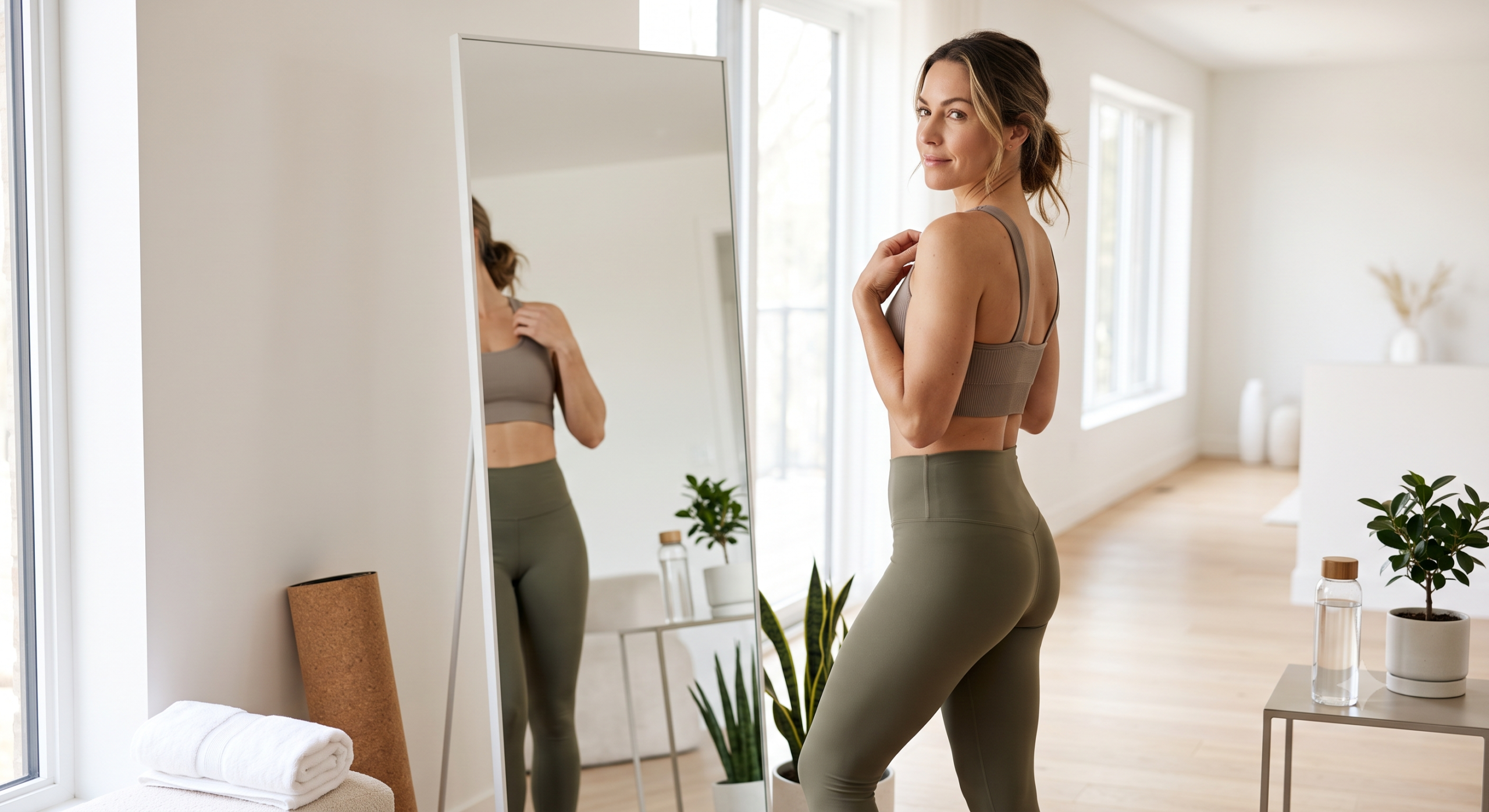
Bra bulge, banana rolls, and muffin tops are the familiar nicknames for small pockets of fat that settle in predictable spots and tend to stay put no matter how clean the diet or how consistent the workouts. Almost everyone who has chased a fitness goal knows the frustration of watching the scale move while one stubborn area refuses to budge.
These pockets are not a sign of laziness or a failed routine. They are largely a matter of biology, written into where the body chooses to store fat and how it lets that fat go. Understanding why they linger is the first step toward addressing them with something more effective than another round of crunches.
What These Pockets Actually Are
Each nickname points to a specific deposit of subcutaneous fat, the soft layer that sits just beneath the skin. The table below names the usual suspects and where they tend to appear.
Common name | Where it sits | What it is |
|---|---|---|
Bra bulge | Along the bra band on the upper back and sides | Subcutaneous fat across the back and flank |
Banana roll | The crescent just beneath the buttock fold | A localized deposit below the gluteal crease |
Muffin top | The area that spills over the waistband | Fat gathered at the flanks and lower abdomen |
What these areas share is a stubbornness that has little to do with effort. They are governed by genetics and hormones far more than by the number of sit-ups a person can do.
Why Diet and Exercise Reach Their Limit
When you lose weight, your fat cells shrink. They release the lipids stored inside them, and the area they occupy gets smaller. What dieting does not do is choose where that shrinkage happens or remove fat cells from a particular spot. Your body follows its own genetically guided order when it sheds fat, and the areas you most want to slim are often the last to respond.
What the research shows A landmark study published in the journal Nature found that the number of fat cells a person carries is largely set during childhood and adolescence, then stays remarkably constant throughout adulthood, even after major weight loss. Losing weight shrinks existing fat cells rather than erasing them, which helps explain why fat in stubborn areas can cling on even as the rest of the body slims down. |
This is also why spot reduction, the idea that exercising a body part burns the fat sitting on top of it, does not hold up. Endless side bends build the muscles under the love handles without melting the fat above them. The fat covering a region and the muscle beneath it work fairly independently, so training one does little to the other.
Hormones add another layer. Estrogen and cortisol both influence where fat is stored and how readily it leaves, which is part of why fat patterns can shift with age and after pregnancy. For many people, a banana roll or a touch of bra bulge persists at a perfectly healthy weight, simply because that is where their body is inclined to keep a reserve.
Part of the resistance is built into the fat itself. The deposits in stubborn areas tend to carry a higher share of alpha-2 adrenergic receptors, which slow the release of stored fat, alongside a comparatively modest blood supply that carries less of it away once it is released. Those deposits respond sluggishly to the very signals that empty fat from easier areas, so they shrink last and least even when everything else is working.
Stubborn Fat Versus the Fat That Affects Health
It helps to separate the fat behind these nicknames from the fat that carries real health consequences. Subcutaneous fat, the kind that forms a bra bulge or a banana roll, sits just under the skin and is largely a cosmetic matter. Visceral fat lies deeper in the abdomen and wraps around the internal organs, and it is the type most closely tied to metabolic risk.
The encouraging part is that visceral fat tends to respond well to diet and exercise, which is where those efforts pay off most. The pockets that resist are usually the harmless subcutaneous kind, which is precisely why they are better matched to a targeted cosmetic treatment than to another month of restriction.

What Actually Reduces a Stubborn Pocket
Since diet works on the size of fat cells rather than their number or location, lasting change in a specific pocket usually calls for a treatment designed to target that pocket directly. This is the entire purpose of body contouring and sculpting in Sylvania and Bloomfield Hills, a category of treatments built to reduce fat in a defined area rather than across the whole body.
The right approach depends on the size of the deposit and the quality of the skin around it. The table below outlines the main options and where each one fits.
Approach | How it works | Best suited to |
|---|---|---|
Non-surgical fat reduction | Targets and reduces fat cells in a specific area with little to no downtime | Small, defined pockets with firm skin |
Minimally invasive contouring | Reduces fat while tightening the overlying skin using radiofrequency energy | Pockets paired with mild skin laxity |
Liposuction | Physically removes fat from a targeted area in a single session | Larger or denser deposits |
Skin tightening | Firms loose or crepey skin after fat is reduced | Lax skin with little remaining fat |
For modest, well-defined areas like a banana roll or a muffin top, a treatment such as laser lipo in Sylvania and Bloomfield Hills can reduce the pocket with minimal interruption to daily life. When a deposit comes with a little loose skin, a radiofrequency-assisted option such as BodyTite in Sylvania and Bloomfield Hills reduces the fat and firms the area at once. For larger or more established pockets, liposuction in Sylvania and Bloomfield Hills remains the most direct way to remove fat in a single session.
No single method is right for every pocket. A banana roll on firm, elastic skin may need nothing more than a focused fat-reduction session, while a softer post-pregnancy midsection often calls for fat reduction and skin support working together. Matching the approach to the specific area, rather than to a brand name, is what produces a result that looks like part of the body rather than a correction.
The Role of Skin Quality
Fat reduction is only half the picture. When fat leaves an area that has lost some elasticity, the skin can look loose or crepey rather than smooth. This matters most over places like the lower abdomen, where skin has often been stretched in the past.
Pairing fat reduction with skin tightening in Sylvania and Bloomfield Hills addresses both at once, firming the surface as the underlying pocket shrinks. A consultation is the place to judge how much each part matters for your particular case, since skin that is still firm may need no tightening at all.
What to Consider Before Treatment
A few honest checks help set the right expectations before booking anything.
- These treatments refine; they do not replace healthy habits. Body contouring works best on a stable weight, since significant weight gain afterward can enlarge the fat cells that remain in untreated areas.
- A good candidate is close to their goal. The ideal time to address a stubborn pocket is when diet and exercise have taken you as far as they reasonably can, and one area is all that stands in the way.
A realistic expectation Stubborn fat pockets persist because of where the body is built to store fat, not because of a lack of discipline. Diet and exercise shrink fat cells everywhere, yet they cannot dictate which area gives way first or remove fat from a chosen spot. Targeted body contouring fills that gap, reducing a defined pocket and, where needed, firming the skin above it, so the result reflects the effort already put in. |
Frequently Asked Questions
Why won't my muffin top go away even though I exercise?
Because exercise shrinks fat cells across the whole body rather than removing them from one area, and your genetics decide where fat is shed last. A muffin top often holds on at a healthy weight for exactly that reason.
Is spot reduction real?
No. Training a specific muscle strengthens that muscle but does not burn the fat sitting over it. The fat and the muscle beneath it respond to different signals.
Are these fat pockets a health concern?
Usually not. These pockets are typically cosmetic rather than medical, and they often appear in people at a perfectly healthy weight.
Will the fat come back after treatment?
Treatments that reduce fat cells in an area lower the number of cells there, so the treated pocket is less likely to return at a stable weight. Significant weight gain can still enlarge the fat cells that remain elsewhere.
How do I know which treatment I need?
A consultation is the most reliable guide. The right choice depends on the size of the pocket and the firmness of the skin around it, which a provider can assess in person.
Is there much downtime?
It depends on the approach. Non-surgical options often involve little to no downtime, while liposuction requires a recovery period. Your provider will explain what to expect for the option that suits you.
Final Thoughts
A stubborn pocket of fat is rarely a verdict on someone’s effort. It is usually just the place their body has decided to hold on, and no amount of targeted exercise will talk it out of that decision. What does work is a treatment aimed at the pocket itself, chosen to match both the fat and the skin around it.
If a stubborn pocket has outlasted everything you have thrown at it, the team at iBeauty Med Spa can help you map out the options in Sylvania or Bloomfield Hills. Book a consultation to find out which approach fits your body and your goals.
References
- Spalding, K. L., et al. “Dynamics of Fat Cell Turnover in Humans.” Nature, vol. 453, 2008, pp. 783–787. nature.com
- Karpe, F., and K. E. Pinnick. “Biology of Human Adipose Tissue Distribution: Determinants in Disease and Pharmacotherapy.” Nature Reviews Endocrinology, vol. 11, 2015, pp. 90–100.
- American Society of Plastic Surgeons. “Plastic Surgery Statistics.” plasticsurgery.org